
How Hair Masks Repair Damaged Hair at the Fiber Level (And Why Some Don’t Work)
Learn how hair masks repair damaged hair at the fiber level, why some fail, and how consistent use improves elasticity, reduces breakage, and supports healthier hair.
12/31/20255 min read
How Hair Masks Repair Damaged Hair at the Fiber Level (And Why Some Don’t Work)
Hair masks are often marketed as miracle repair treatments, yet many people notice that some masks transform their hair while others barely make a difference. This inconsistency is not random. It reflects how hair damage actually occurs and how different formulations interact with the hair fiber, not just the surface.
To understand why certain hair masks support long-term improvement while others provide only temporary softness, it is essential to look at hair at the fiber level. This article explains what hair damage truly means, how hair masks work within the structure of the hair shaft, why some masks fail, and how consistent, fiber-supportive care leads to reduced breakage and healthier hair behavior over time.
What Hair Damage Really Means at the Fiber Level
Hair damage is not a single event. It is the cumulative result of repeated stress that alters how the hair fiber responds to tension, moisture changes, and daily handling.
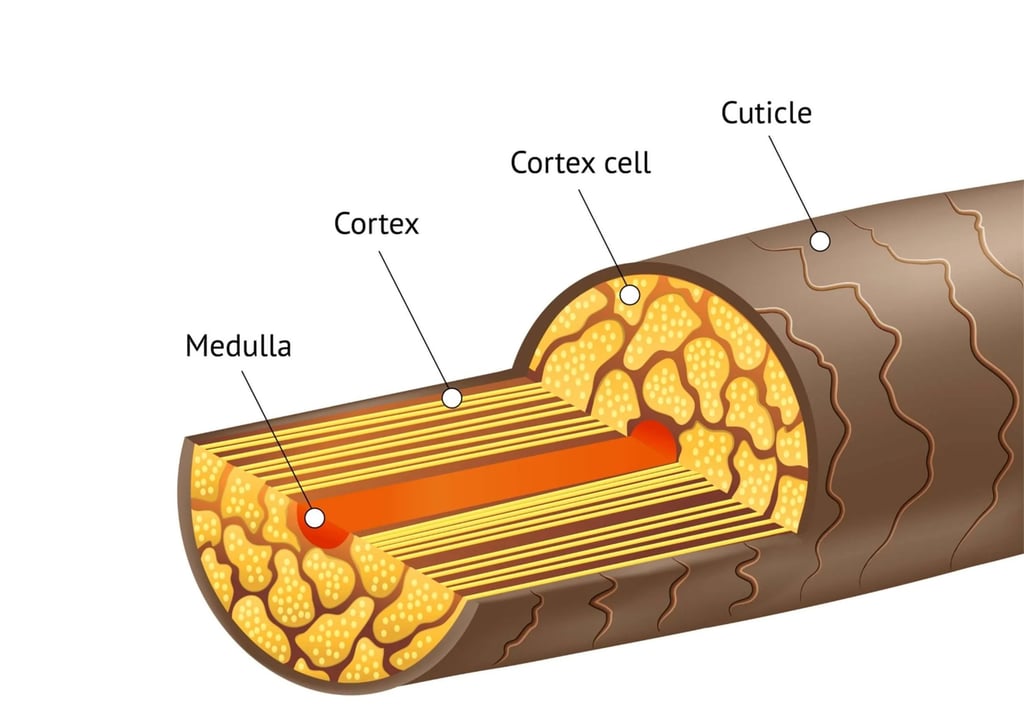
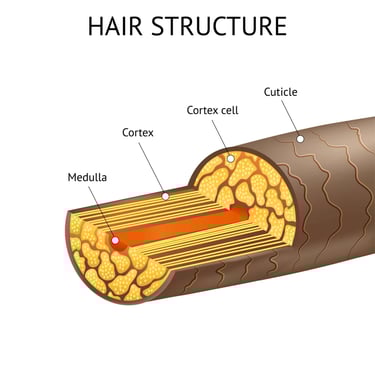
The Structure of a Hair Fiber (Simplified)
Each strand of hair is a composite fiber made up of three main layers:
Cuticle: The outer layer of overlapping scales that protects the inner structure and regulates moisture movement.
Cortex: The core of the hair fiber, responsible for strength, elasticity, and color.
Medulla: A central channel present in some hair types, with little relevance to cosmetic repair.
When hair is healthy, these layers work together to distribute stress evenly along the strand. When hair is damaged, that coordination breaks down.
How Hair Becomes Structurally Compromised
Hair damage develops gradually through repeated exposure to stressors rather than from a single incident. Common contributors include:
Heat styling that dehydrates and stiffens the hair fiber
Chemical treatments that weaken internal structure
Environmental exposure such as UV radiation and pollution
Mechanical friction from brushing, tying, and styling
At the fiber level, this results in lifted or chipped cuticles, micro-fractures along the shaft, and uneven stress distribution. Instead of bending under tension, hair begins to snap at its weakest points.
How Hair Masks Interact With the Hair Fiber
Hair masks do not “heal” hair biologically. Hair is not living tissue. Instead, effective hair masks support fiber performance, helping damaged strands behave more like healthy ones.
What Hair Masks Can Realistically Do
When well formulated and used consistently, hair masks can:
Improve moisture balance within the hair fiber
Increase flexibility and elasticity
Reduce friction between strands
Help fibers behave more cohesively under stress
These changes lower the likelihood of breakage and improve manageability over time.
What Hair Masks Cannot Do
Even the most advanced hair masks cannot:
Regrow hair
Permanently fuse broken keratin chains
Instantly reverse severe chemical damage
Understanding these limits helps set realistic expectations and explains why meaningful results require consistent use over weeks rather than minutes.
Fiber-Level Repair vs Surface Conditioning: Why Results Vary
One of the main reasons people feel that hair masks “don’t work” is confusion between surface softness and functional fiber improvement.
Surface Softness Versus Functional Improvement
Some hair masks rely heavily on surface-coating ingredients that smooth the cuticle temporarily. Hair feels soft, shiny, and slippery after rinsing, but the internal fiber remains stiff or fragile.
Fiber-supportive masks focus instead on moisture retention and flexibility. The initial feel may be subtler, but the benefits accumulate with repeated use.
Why Hair That Feels Soft Can Still Break
Hair can feel smooth yet still snap if:
Elasticity has not improved
Moisture is not retained between washes
Stress continues to concentrate at weak points
True fiber-level improvement becomes evident not only in feel, but in how hair responds to brushing, styling, and tension.
The Role of Moisture Balance in Fiber Repair
Moisture is not just about softness; it directly affects how hair fibers handle mechanical stress.
Why Dry Hair Breaks More Easily
Dry hair fibers are rigid. When force is applied, they cannot redistribute stress evenly, causing concentrated tension and snap-off.
How Moisture Improves Fiber Performance
Proper moisture balance allows hair fibers to:
Flex instead of snapping
Distribute stress more evenly
Reduce strain on existing internal bonds
Hair masks that support moisture retention play a central role in reducing breakage, even without aggressive repair claims.
Hair Bonding Claims vs Fiber Support
The term “bond repair” is widely used in haircare, but it is often misunderstood.
What Bond Repair Actually Means
Some products target specific chemical bonds within the hair fiber. These can be helpful for severe chemical damage, but they are not necessary for every type of hair concern.
How Indirect Bond Support Works
Many effective hair masks focus on indirect bond support rather than chemical reconstruction. By improving flexibility, cohesion, and lubrication, they reduce ongoing stress that further weakens existing bonds.
This approach emphasizes stabilization and preservation rather than aggressive intervention.
Why Some Hair Masks Don’t Work at All
When hair masks fail, the issue is rarely that hair is “too damaged.” More often, it comes down to mismatches between formulation, usage, and expectations.
Common Reasons Hair Masks Fail
The formula is unsuitable for the user’s hair type or density
Overuse leads to buildup rather than support
Excessive protein increases stiffness
The mask is applied at the wrong stage of the routine
Expectation Mismatch
Hair masks work cumulatively. Using them sporadically or expecting permanent repair from a single application often leads to disappointment.
How Consistent Masking Improves Fiber Behavior Over Time
Hair fiber performance improves gradually, not instantly.
Short-Term Effects (First 1–2 Uses)
Initial improvements are often surface-oriented:
Better slip
Easier detangling
Reduced friction
Medium-Term Effects (3–4 Weeks)
With consistent use:
Breakage begins to decrease
Elasticity improves
Hair responds more predictably to styling
Long-Term Effects (6+ Weeks)
Over time:
Fibers behave more uniformly
Stress is distributed more evenly
Length retention improves
These changes reflect real fiber-level support rather than cosmetic coating.
Where Treatment-Driven Hair Masks Fit In
Some hair masks are designed not as instant fixes, but as supportive treatments that work best within structured routines.
An example of this philosophy is Curaphy Hair Mask, which is formulated to support hair bonding indirectly rather than claiming to rebuild bonds at a molecular level. By improving moisture balance, flexibility, and internal support, this type of formulation helps weakened hair fibers function more cohesively over time, particularly when used consistently in recovery-focused routines.
How Supportive Conditioning Preserves Hair Bonds
While chemical bond rebuilding requires specific actives, many damaged-hair routines benefit more from reducing ongoing stress than from aggressive reconstruction.
Hair masks that:
Improve fiber cohesion
Enhance elasticity
Reduce friction during detangling
Help hair tolerate heat and environmental exposure
support existing bonds by minimizing further degradation.
Features That Matter in Fiber-Supportive Hair Masks
When hair masks are used regularly, formulation characteristics matter more than dramatic claims. Masks designed with a recovery mindset—such as Curaphy Sparse Hair and Dense Hair Deep Conditioning Hair Mask—often emphasize:
Deep conditioning paired with supportive repair
Density-responsive performance for different hair types
Easy slip that reduces mechanical breakage
Support for heat- and color-stressed hair
Clean, lightweight rinsing without heavy residue
These qualities make consistent use easier and reduce the risk of overuse or buildup.
How to Tell If Your Hair Mask Is Helping at the Fiber Level
Surface feel alone is not a reliable indicator. Instead, observe how hair behaves under tension.
Signs of Real Fiber-Level Improvement
Hair stretches slightly before breaking
Less snap during brushing or styling
More consistent texture along the length
Signs Results Are Only Surface-Level
Softness disappears quickly
Breakage remains unchanged
Hair feels coated rather than resilient
Behavior under stress provides better feedback than touch alone.
Frequently Asked Questions
Do hair masks actually repair hair?
Hair masks do not biologically repair hair, but they can significantly improve fiber performance, reducing breakage and improving resilience.
What does fiber-level repair mean?
It refers to supporting moisture balance, elasticity, and cohesion so hair behaves more like healthy fiber under stress.
Why does my hair still break after using a mask?
Breakage persists when elasticity and moisture retention have not improved or when masks are used inconsistently.
Are strengthening masks better than moisturizing ones?
Neither is universally better. Hair requires a balance of moisture and flexibility to reduce breakage.
How long does fiber-level improvement take?
Meaningful reduction in breakage typically appears after three to six weeks of consistent use.
Final Takeaway
Hair masks work best when viewed as fiber-performance support, not miracle cures. Hair damage occurs at the fiber level, and improvement depends on restoring moisture balance, flexibility, and cohesion—not just surface softness.
Understanding how hair masks interact with the hair fiber explains why some formulas deliver lasting benefits while others fall short. When used consistently and chosen thoughtfully, fiber-supportive masks—such as Curaphy Hair Mask—can help damaged hair behave more resiliently over time, reducing breakage and improving long-term manageability.
The key is not expecting instant repair, but committing to routines that allow hair fibers to stabilize, adapt, and perform better with each wash cycle.